
Last updated November 25, 2026
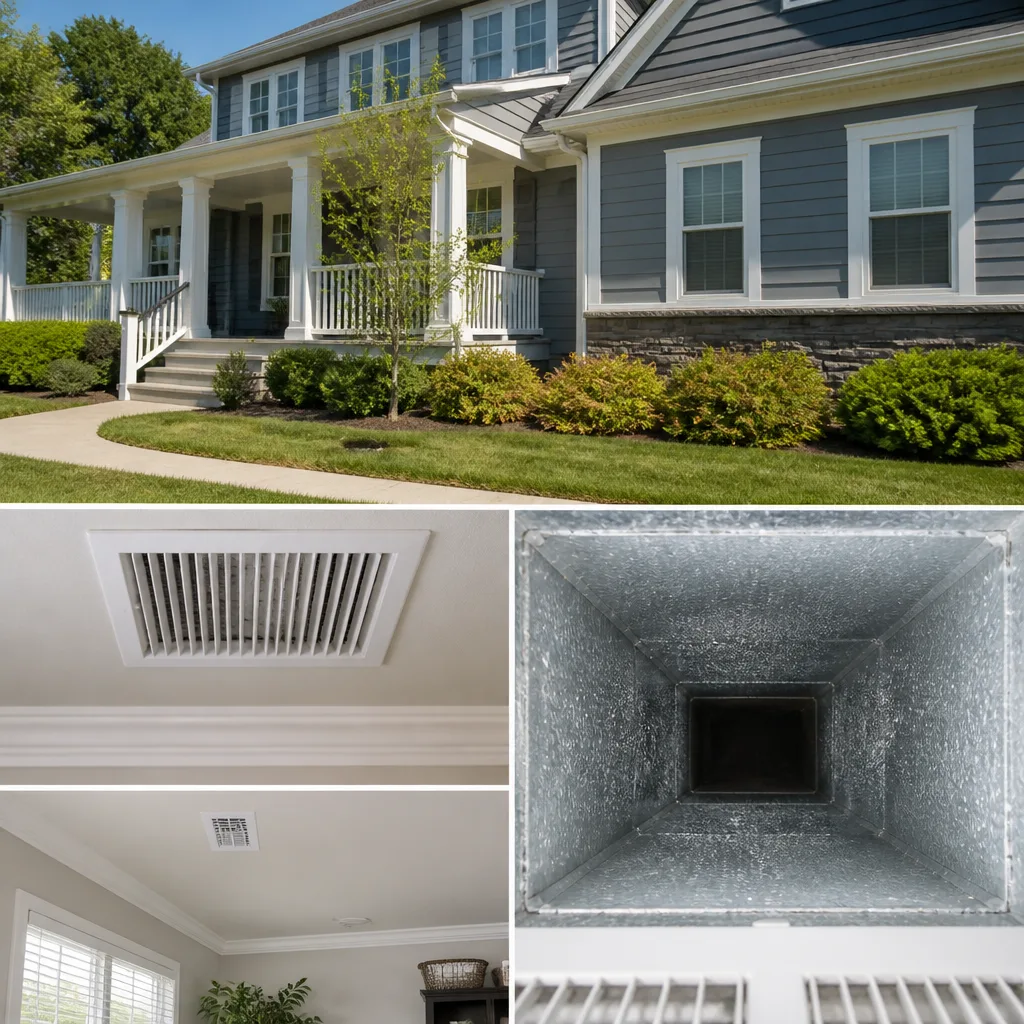 Whole-home duct cleaning
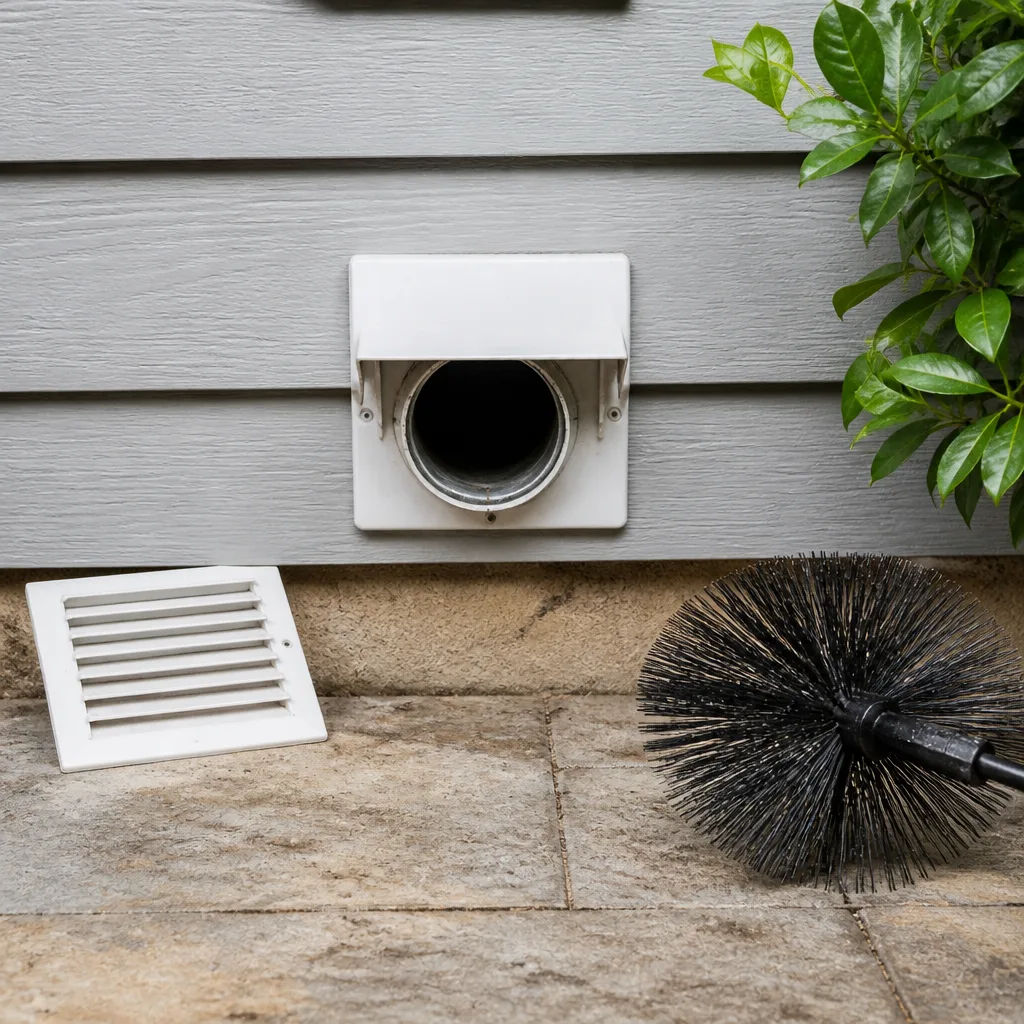 Dryer vent cleaning
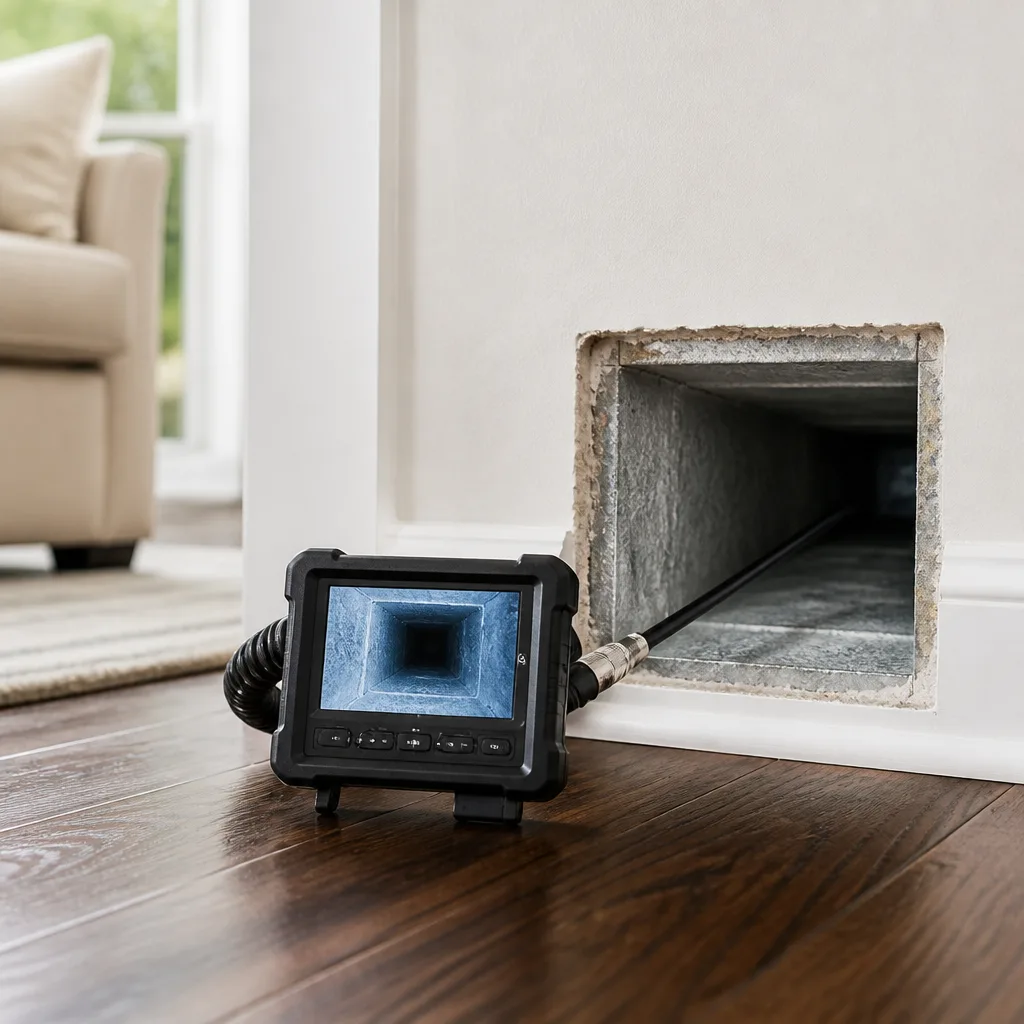 Camera inspection
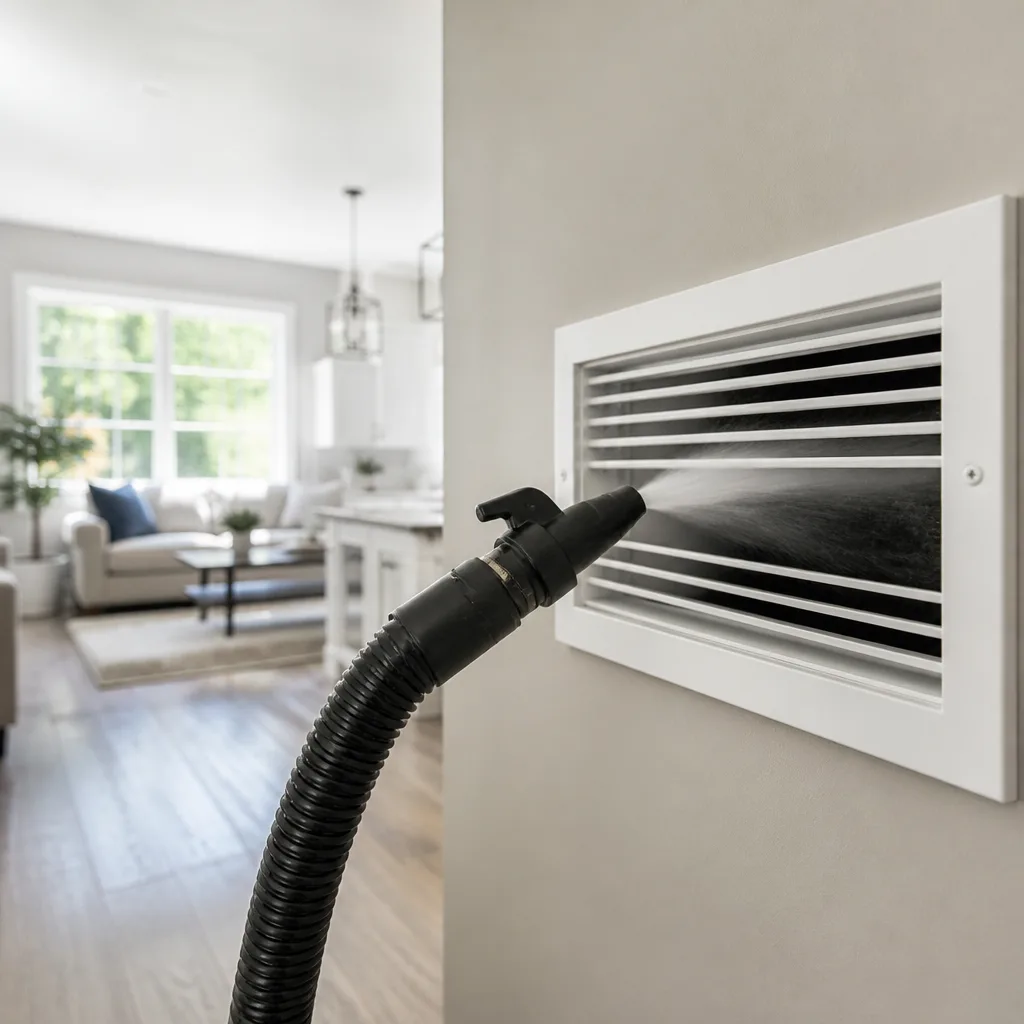 Sanitizing & deodorizing
Whole-system duct and dryer vent check with before-and-after photos - you see exactly what came out of your vents
That "$99 whole-house special" is a bait ad - the real number appears once they are in your hallway, or the "clean" is a shop-vac at the register. We photograph the inside of your ducts before and after instead.
Seasonal Air Duct Cleaning Care for St. George: Year-Round Homeowner’s Guide
Most homeowners treat duct cleaning as a once-a-year chore, usually penciled in when the vents start looking dusty or someone in the house starts sneezing. That schedule misses the point. Your duct system doesn’t live in a vacuum. It lives inside your house, in St. George, on the northeastern tip of Staten Island, where the air it pulls in shifts through four very different conditions over twelve months. Harbor humidity in late summer, cold air mass intrusion in winter, pollen from the Greenbelt in spring, and the first heating cycle of fall each put a different kind of stress on the same ductwork. A single annual cleaning answers one season’s problem and ignores the other three. This guide walks through what’s actually happening inside your ducts month by month, what to check, and how to time the work so you’re not reacting after the fact.
Quick Answer
Ducts in St. George need seasonal attention, not just annual cleaning, because the northeast shore’s harbor humidity, winter cold-air intrusion, spring pollen, and fall’s first heating cycle each create different conditions inside the system. The most important single maintenance step is a pre-season cleaning and inspection in early fall, before the furnace runs for the first time. Between cleanings, check filter condition, listen for air leaks at joints, and watch for condensation on supply registers.
Styles & brands we work with
- Whole-home duct cleaning
- Dryer vent cleaning
- Camera inspection
- Sanitizing & deodorizing
Table of Contents
- Why St. George Ducts Need Seasonal Care, Not Annual Cleaning
- Summer: Harbor Humidity and What Condensation on Your Registers Really Means
- Fall: Why the First Heating Cycle of the Year Is the One That Matters Most
- Winter: Negative Pressure, Attached Garages, and Crawlspace Air
- Spring: Pollen Infiltration Through Return Grilles
- The Four-Season Duct Care Calendar for St. George Homes
- What St. George’s Housing Stock Means for Duct Condition
- Signs Your Duct System Is Overdue for Service
Why St. George Ducts Need Seasonal Care, Not Annual Cleaning
St. George sits at the northeastern tip of Staten Island, and that location does something specific to a duct system. Summer weather arrives with humidity carried off the harbor and the surrounding water, and that humid air is drawn straight into the return side of your HVAC system. Winter brings cold air masses that push down and settle, tightening the air in your home and intensifying the pressure differences that drive air through every gap in the duct envelope. Spring brings windborne pollen from the Greenbelt and the wooded pockets between neighborhoods. Each season stresses the same duct system differently.
A single yearly cleaning, usually scheduled in whatever month the homeowner got around to calling, addresses the accumulation that built up in that one window. It doesn’t account for what the previous season deposited in the duct lining, and it doesn’t account for what the next one is about to push through.
We think about the system in four distinct phases:
- Cooling season (roughly June through September): conditioning equipment runs long hours, and moisture management becomes the dominant concern. If you’ve ever wondered what that wet ring on a supply register actually means, it’s covered below.
- First heating cycle (September through October): the furnace or heat pump runs for the first time in months, pushing months of settled material back into the air and the system itself.
- Deep winter (November through February): the house operates under sustained negative pressure relative to some adjacent spaces, and air from garages, crawlspaces, and the exterior envelope finds its way into return pathways.
- Spring transition (March through May): windows open, pollen season peaks, and older homes without tight envelope sealing pull outdoor particulate straight into return grilles.
Treating these as four separate events, with service timed to the transition between them, is what we mean by seasonal care. It’s the difference between maintaining a system and occasionally vacuuming it. If you haven’t scheduled a full cleaning in more than a year, our air duct cleaning service is the practical starting point.
Summer: Harbor Humidity and What Condensation on Your Registers Really Means
Late August in St. George can push indoor humidity levels that stay elevated for weeks, and that’s the season when duct liners are most vulnerable. When the cooling system runs, conditioned air inside the supply ducts is colder than the surrounding air in adjoining spaces like attics, garages, and exterior walls. If the duct insulation is compromised anywhere along that run, moisture condenses on the cold surface. That condensation is the starting condition for microbial growth inside the liner.
What most homeowners notice first is a wet ring or damp patch on the surface of a supply register or on the ceiling around it. That’s worth taking seriously. A register that’s cool and slightly damp because the room is humid is one thing. A register that has visible moisture beading on the metal grille, or staining on the surrounding surface, suggests the supply line feeding it is running cold and wet somewhere upstream.
Here’s why it matters. Once the liner holds moisture, the conditions that sustain microbial growth are present for the rest of the cooling season. And by late September, when the heating system runs for the first time, whatever settled and grew inside those ducts is redistributed through the house by the first warm-air push.
What to watch during the St. George summer:
- Condensation on registers: visible moisture on grilles or ceiling surfaces around supply registers.
- Musty odor near vents: particularly in upstairs rooms and any duct run that passes through an unconditioned attic or garage.
- Filter condition between changes: a filter that loads up faster than usual in summer signals material is being pulled into the return side more heavily than normal.
- Humidity inside the house: if indoor relative humidity climbs beyond what the AC should be managing, moisture may be adding to the duct system from condensation rather than the cooling equipment.
The summer solution isn’t a full cleaning every August. It’s an inspection of the duct envelope and insulation at the start of the cooling season, so you know whether those cold runs are staying dry. If the system tests dry, you’ve confirmed the liner is intact and can wait for the fall cleaning. If not, addressing the moisture source early in the season prevents a longer-term problem. Our technicians have up to 11 years of experience with exactly this pattern of harbor-driven summer humidity, and they use Nikro HEPA vacuum technology to remove both accumulated debris and the moisture-driven film that develops when a duct stays damp.
Fall: Why the First Heating Cycle of the Year Is the One That Matters Most
The first heating cycle is the most important one to prepare for, and almost every homeowner gets this wrong. The instinct is to wait until the heat actually runs, notice a smell or a bit of dust settling, and then call. By then, whatever has been settling in the ducts since spring has already been pushed through the house once. The point of a fall pre-season cleaning is to remove that accumulated material before the first warm air movement distributes it.
What actually happens on that first cycle is worth understanding. During the cooling season, the supply side of the duct system carries cold, and often moist, air. Debris, dust, and any material the return side drew in settles in the low points of the duct run and along the liner surface. When the heating system kicks on, that settled material is lifted by the warm, dry airflow and carried into the rooms. That’s why the “first heat” smell is so distinctive. It’s not the furnace burning off dust on the heat exchanger alone. It’s months of accumulation from the whole system moving at once.
A proper pre-season flush accomplishes three things:
- Removes accumulated debris before it distributes. A contact-cleaning pass through the trunk and branches with a Rotobrush system agitates material off the liner and into the vacuum airstream, where a HEPA unit captures it before it reaches the rooms.
- Confirms the duct envelope is intact. Fall is when joint separation, disconnected flex runs, and loose connections become obvious. Air leaks that went unnoticed in summer become heated air wasted into an attic or crawlspace in winter. Duct repair and sealing done before the heating season prevents that. Our St. George Air Duct Cleaning Pros team treats duct repair and sealing as a core service rather than an add-on, which matters because cleaning alone can’t fix a disconnected run.
- Prepares the filtration side. Fresh filter, a check of the housing, and confirmation that the return grilles aren’t blocked by furniture or rugs. A system that’s clean but starved for return air runs poorly all winter.
If you haven’t had the system cleaned in more than a year, schedule the fall service early enough that the work is done before the overnight temperatures drop low enough that you’d want the heat on. That gives you a clean system for the first cycle rather than the second.
Winter: Negative Pressure, Attached Garages, and Crawlspace Air
Winter in St. George isn’t the constant cold of inland upstate, but the cold snaps that arrive with air mass intrusion from the north and west change how a house behaves. When the temperature drops outside, the pressure differential between inside and outside of the building envelope increases. Warm air rises and escapes through the top of the house, and cold air is pulled in through every available opening at the bottom. That includes attached garages, crawlspaces, and penetrations for plumbing and wiring.
Here’s the problem. If your return air pathway has any leakage into an attached garage or a crawlspace, winter is when that leakage is strongest. Negative pressure inside the house pulls garage air, which can carry exhaust fumes and vehicle-related particulate, into the return system and then into living spaces. Crawlspaces, particularly those that were never fully encapsulated, contribute soil-related particulate and moisture vapor to the same pathway.
What to check during the St. George winter:
- Garage-to-house connections: the door, the firewall between garage and house, and any duct or return grille that shares a wall with the garage. If you can feel air movement around the door frame when the heating system runs, that’s a warning sign.
- Crawlspace duct runs: any duct passing through a vented crawlspace should be insulated and sealed, particularly at the joints. Cold air hitting an uninsulated duct in a crawlspace loses heat and can trigger condensation when the duct later warms.
- Return grille location: a return grille close to the floor in a hallway that runs over a crawlspace or garage wall can be pulling from those spaces into the system.
- Pressure balance: if the house feels drafty at the baseboards while the heating system runs, the system is operating under more negative pressure than it should be, and the return pathway is where to investigate.
Winter is also the season to think about whole-home air quality equipment rather than just cleaning. A properly sized Honeywell or Aprilaire filtration component on the HVAC system removes a share of the particulate that gets past the return grilles, but it only does its job if the duct system feeding it is intact. Sealing and repair are what make downstream filtration work. This is why we treat duct repair and sealing as the winter priority.
Spring: Pollen Infiltration Through Return Grilles in Older Homes
Spring in St. George brings the Greenbelt’s pollen season directly to the doors and windows of older homes that don’t have tight envelope sealing. Homes built in the early and mid-20th century in St. George, particularly in the neighborhoods closer to the ferry terminal and the older residential blocks on the northeast side of the island, often have original windows, less consistent insulation, and more openings where outdoor air meets indoor air. Pollen finds those openings.
The problem is compounded by where the return grilles sit. A return grille in a hallway or central location pulls from the room, but if the house has pressure imbalances, it can also pull from the envelope. When spring pollen is heavy and the windows have been open, the return-airstream carries a substantial load of outdoor particulate into the duct system, where it settles in low points and along the liner surface.
What to do in spring:
- Inspect the return grilles before the pollen peak. A return grille with visible dust build-up going into pollen season is going to look much worse by the end of it.
- Check the filter more frequently. During peak pollen weeks, filter loading accelerates. A filter that’s functional through winter may run out of capacity in three or four weeks in spring.
- Watch for envelope leaks. A crack around a window frame or a gap at a door threshold pulls pollen directly into the return pathway. Sealing those openings prevents pollen from reaching the duct system at all.
- Consider a higher-efficiency filter for the season. A whole-home filtration component, like the Honeywell and Aprilaire products we work with, captures fine particles that standard filter media handles less effectively. It’s a seasonal upgrade rather than a permanent fixture, and it earns its keep in spring.
The spring cleaning, if you do one, is really a return-side service. It removes what the winter pushed in and the pollen season added. For most St. George homes, the fall cleaning is the more important of the two. The spring cleaning is the one to schedule if you know you’re in a higher-pollen pocket of the neighborhood or if you spent the winter with any of the winter warning signs above.
The Four-Season Duct Care Calendar for St. George Homes
This calendar is timed for St. George’s climate and takes an hour of homeowner attention per month rather than a service visit. Use it as a checklist that leads into the seasonal service window.
- Late May (start of cooling season): Change filter, inspect visible supply registers for condensation, and confirm the return grille is clear and not blocked. If you noticed a musty smell last summer, book an inspection early.
- July and August (peak humidity): Check filter loading monthly. Watch for condensation on supply registers or ceiling surfaces. Note any musty odor near vents. This is when duct liner moisture problems start.
- Early September (before the first heat): Schedule the pre-season cleaning and inspection. Confirm the duct envelope is intact, joints are sealed, and any flex runs in the attic, garage, or crawlspace are connected and insulated. This is the most important service window of the year.
- October and November (first heating cycless): Change filter. Note whether the first-cycle smell is a one-time occurrence or persists for days. A smell that persists past the first day or two of heating operation is worth a call.
- December and January (deep cold): Check garage-to-house connections, crawlspace ducts, and return grille locations. Listen for drafts and air movement around the baseboards when the heating system runs.
- March and April (pollen season opening): Inspect return grilles. Change filter more frequently during peak pollen weeks. Check window and door envelope for gaps that pull pollen into the return pathway.
- End of April (spring wrap-up): Decide whether the spring cleaning is necessary based on what the winter and spring inspection turned up.
This is the schedule we recommend to every St. George homeowner, whether or not they ever call us. If you use it consistently, you’ll know exactly when the duct system needs work rather than guessing. The single most valuable habit is the September pre-season service window. Miss the rest of the calendar if you have to; do that one on time.
What St. George’s Housing Stock Means for Duct Condition
The housing stock in St. George matters for duct care. The northeastern tip of Staten Island holds some of the oldest residential construction in the borough, from early-20th-century attached rowhouses near the ferry terminal and the waterfront blocks to mid-century homes in the neighborhoods inland from Richmond Terrace. Those older homes were built before modern duct sealing practices became standard, and many have duct runs installed after the original construction, in attics, crawlspaces, or chases that were never designed for them.
What that means in practice:
- Older duct runs tend to have more leakage. Flex duct that was installed decades ago sags, separates at connections, and loses insulation. A cleaning pass alone won’t restore efficiency; duct repair and sealing is what closes that gap.
- Attics and crawlspaces are less insulated than modern standards require. Ducts running through either space lose conditioned air at a higher rate, and any leakage there is more costly because it’s going straight to the outside.
- Return grilles are often in hallways shared with stairwells and enclosed porches. That geometry pulls air from envelope leaks more readily during high pollen and high humidity periods.
- Some newer homes on the island use ducted heat pumps and sealed-envelope construction. Those have less envelope leakage but more concentrated indoor air. The seasonal concerns shift from infiltration to internal circulation, but the maintenance pattern is the same: pre-season service before the heating cycle, filter checks at every season change.
Whichever category your home falls in, the cleaning method matters. Our technicians work with Rotobrush contact-cleaning systems and Nikro HEPA vacuums, and we use Abatement Technologies air scrubbing equipment when a duct system needs a post-cleaning filtration pass. Those are the same equipment categories used in commercial and restoration work rather than consumer-grade tools. If you’re not sure whether the ducts in your home have ever been properly serviced, our HVAC cleaning service covers the air-handler side, which is where a lot of the visible build-up actually lives.
Signs Your Duct System Is Overdue for Service
Between the seasonal calendar checks, these are the signs that mean you shouldn’t wait for the next scheduled window.
- Visible dust settling on horizontal surfaces faster than usual. A sudden increase in dust load, particularly in rooms with active supply registers, suggests the duct system is distributing more debris than it was a month ago.
- Persistent smell after the first heating cycle. If the first-heat smell lingers beyond the first day or two of operation, the system is pushing material that didn’t burn off, and that material is coming from the ducts.
- Condensation you can see on registers. Summer or winter, visible moisture on register surfaces suggests insulation failure or duct temperature imbalance.
- Uneven airflow between rooms. The same room always cold in winter, another always warm, can mean a duct leak that’s diverting air before it reaches the designed pathway. This is a duct repair and sealing issue, not a cleaning one.
- Allergy symptoms that track with the heating and cooling cycles. If you notice symptoms flare at the start of each seasonal run, the timing is a signal.
- Attic, garage, or crawlspace ducts you’ve never seen. If you don’t know the condition of the duct runs in unconditioned spaces, that’s the cheapest inspection you’ll ever authorize.
Common Mistakes to Avoid
- Waiting until after the first heating cycle to call. The whole point of the fall service is to clean before the system runs. Once the first heat has cycled, you’ve already distributed the season’s accumulation through the house.
- Assuming cleaning fixes low airflow. If a room is chronically cold or warm through the season, the cause is often a leak or disconnected run, not debris. Cleaning removes what’s in the ducts; duct repair and sealing fixes what’s leaking out of them.
- Changing the filter on a schedule that ignores the season. St. George’s spring pollen load and summer humidity loading both accelerate filter saturation. A three-month filter interval that works in some climates is too long here in spring and too long in August.
- Ignoring the attached garage and crawlspace. Winter negative pressure makes these the two most common sources of duct contamination in St. George homes, and both are outside the rooms people remember to think about.
- Treating dryer vents as a sometimes service. Dryer vent lint accumulation is a leading cause of residential fires, and it’s not a seasonal issue. It deserves its own schedule. Our dryer vent cleaning service is offered as a dedicated fire-safety service rather than a bundled add-on.
- Assuming a new house doesn’t have duct issues. Newer homes with tight envelopes and ducted heat pumps can concentrate indoor air. Construction debris and dust from initial build-out sometimes sit in duct runs for years before anyone thinks to clean them.
- Calling the cheapest per-vent quote. A single flat price for the whole system, agreed before any work starts, is the way to compare quotes honestly. A per-vent number leaves the total open until the technician is on site, which is where the bait-and-switch in this trade happens.
See the difference
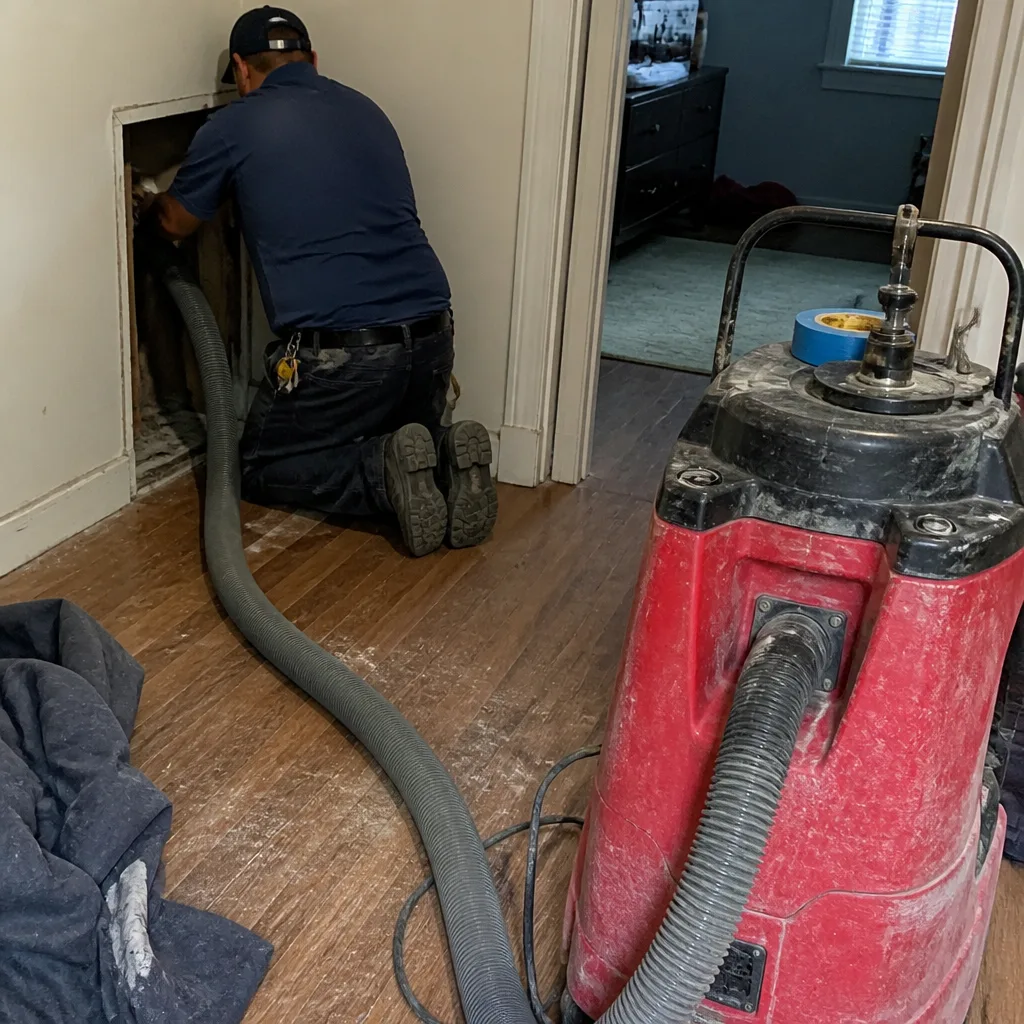 Before
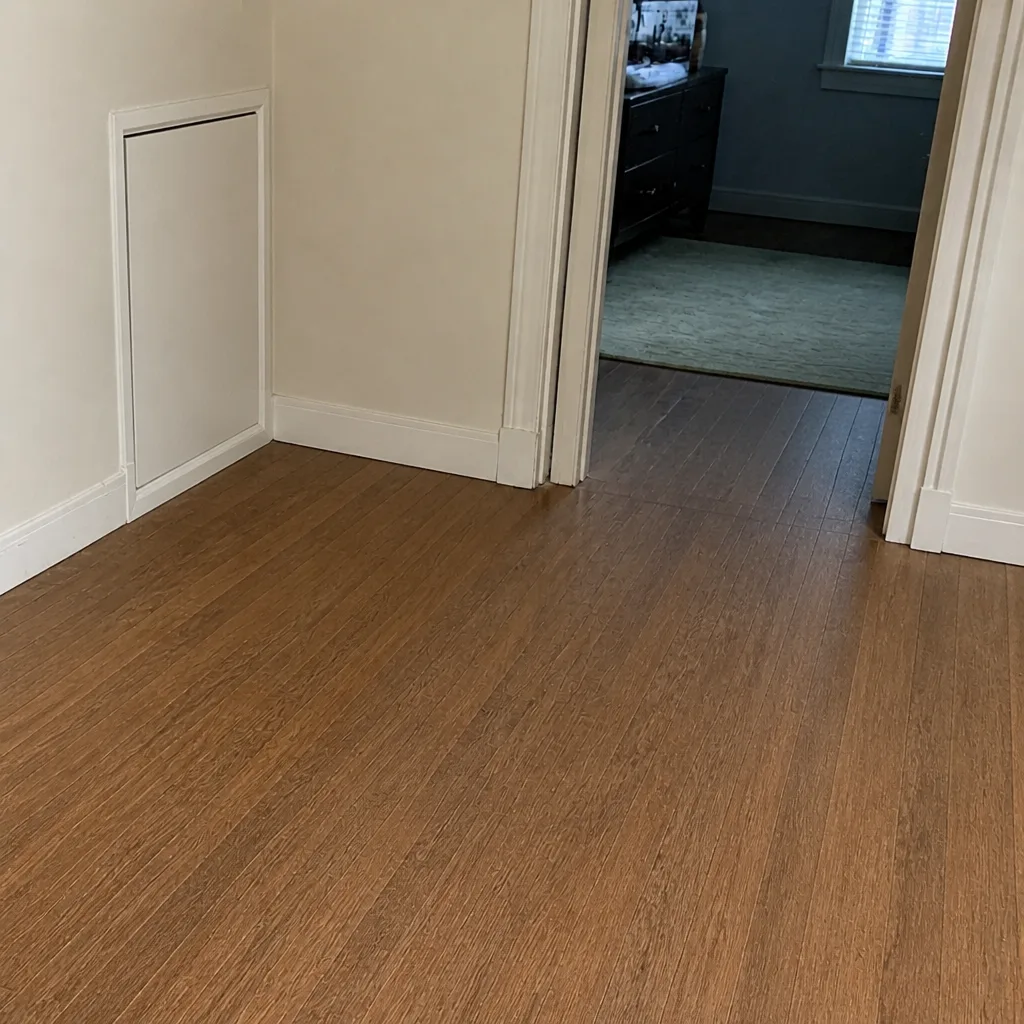 After
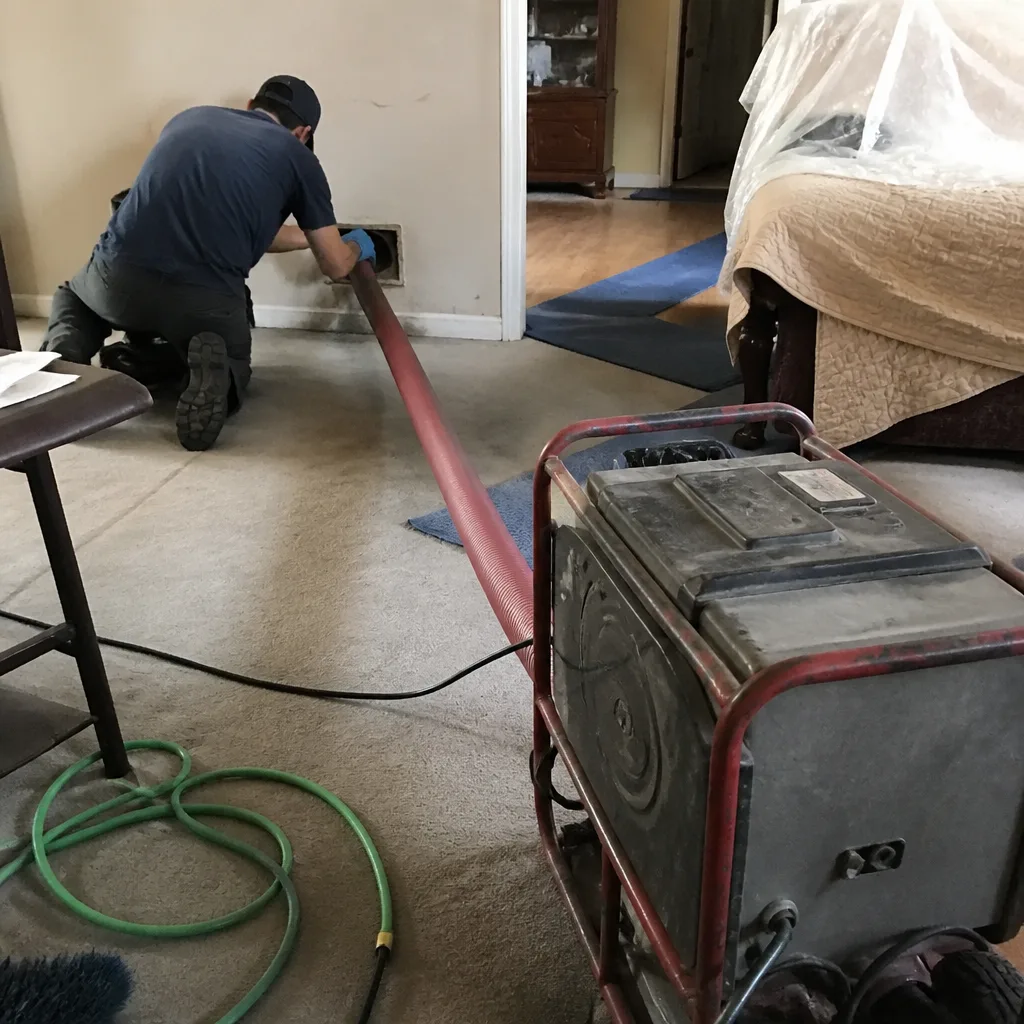 Before
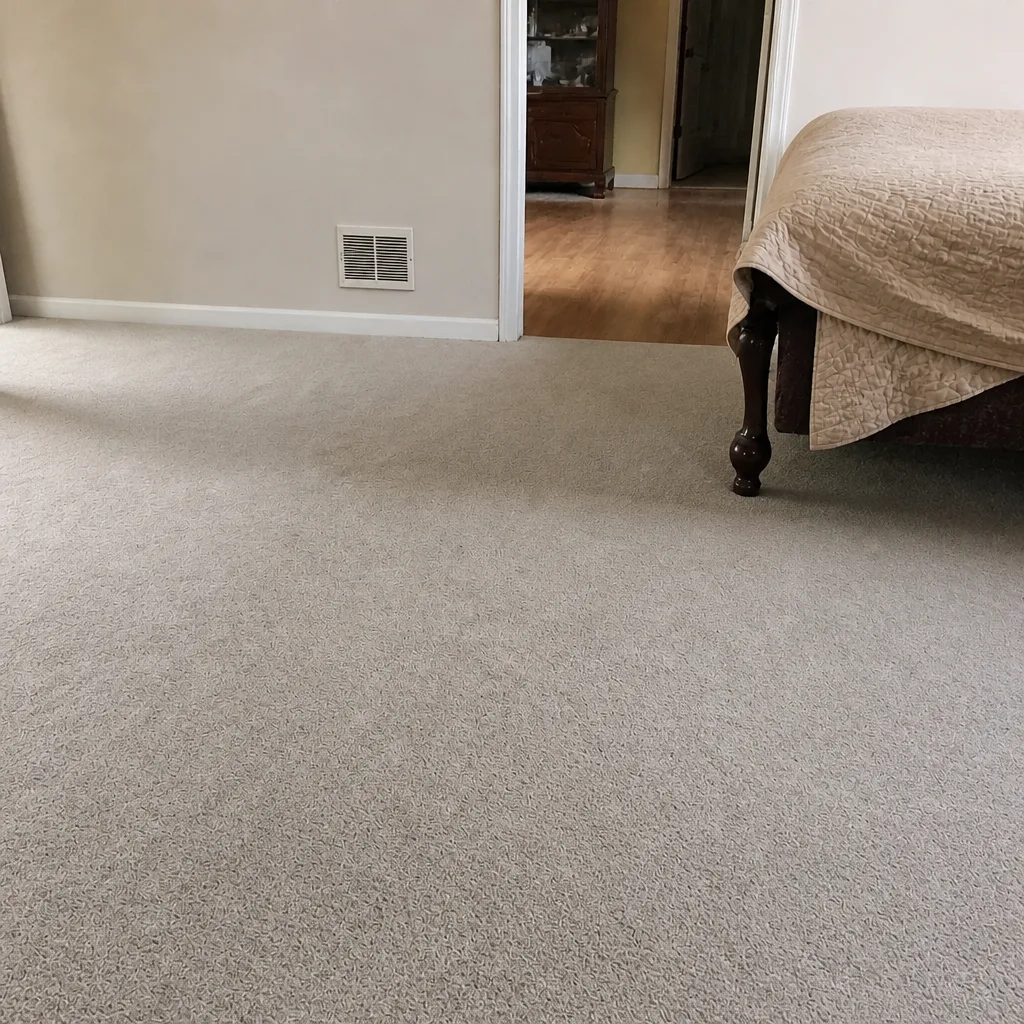 After
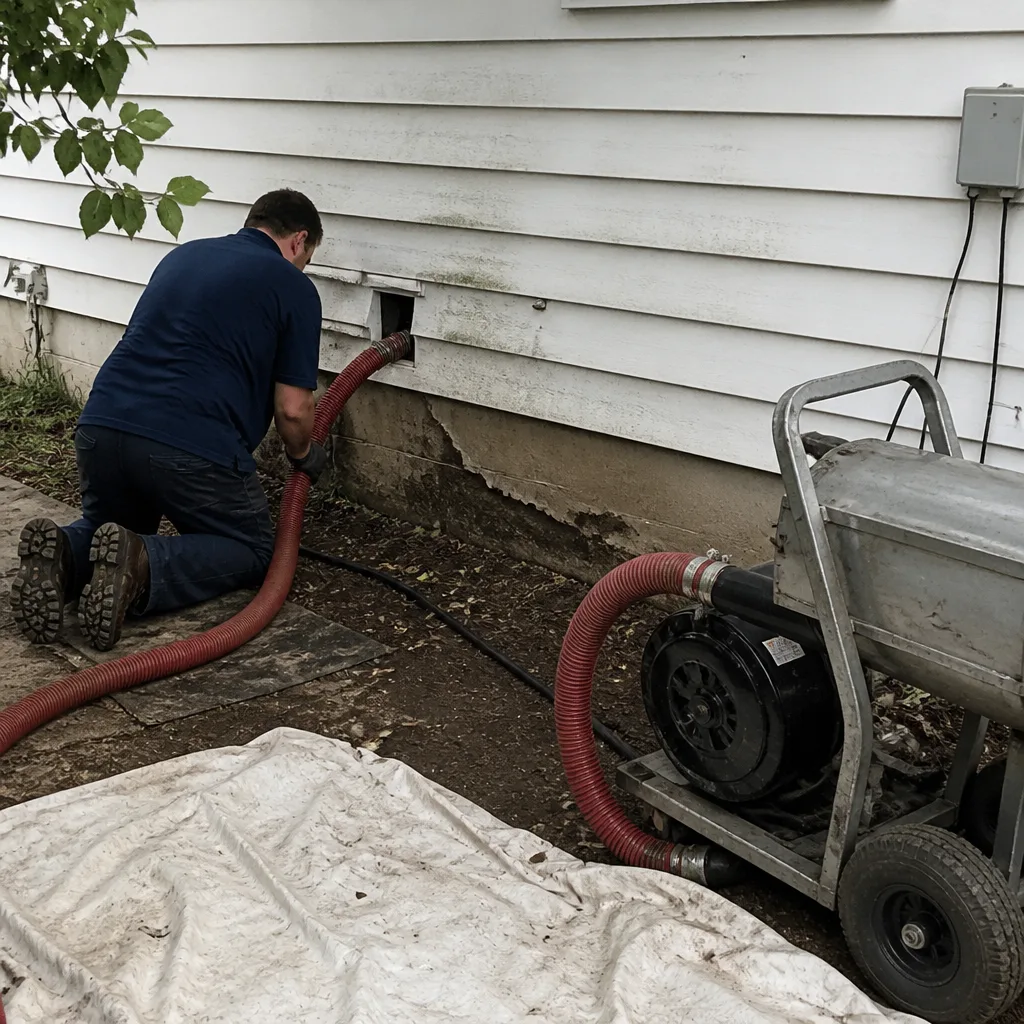 Before
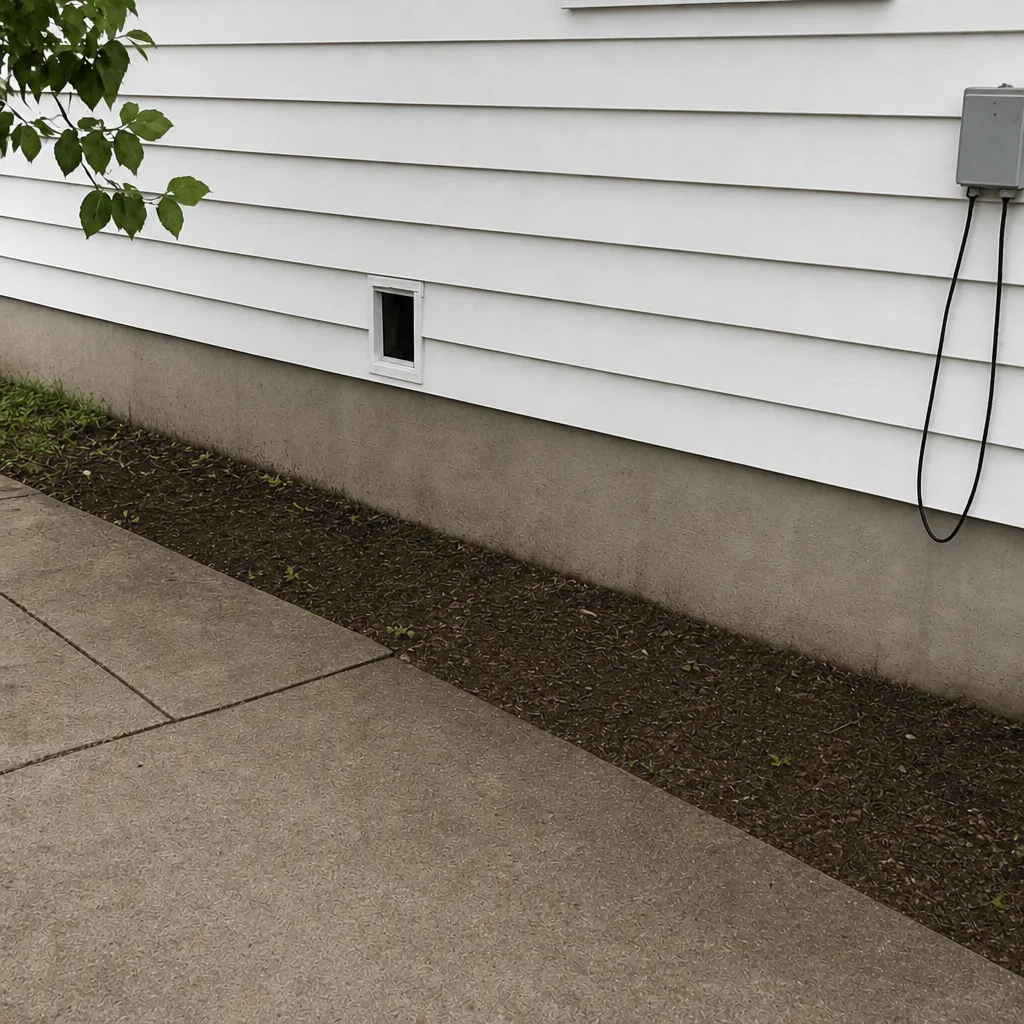 After
When to Call a Professional
Call for scheduling when it’s the pre-season window in September, before the heating system runs for the first time. Call sooner if you notice visible condensation on registers in summer or winter, if the first-heat smell persists more than a day or two, if you see sudden dust accumulation, or if a room’s airflow is notably worse than the others. If you’ve never had the ducts inspected and your home is in St. George, calling for an inspection at the start of any season is the right first move. A professional inspection with a proper camera pass into the duct runs and the air handler tells you what’s actually happening, not what you’ve guessed from the register side. St. George Air Duct Cleaning Pros offers free estimates in St. George – call (888) 848-7351. We answer 24/7. Fast dispatch from 7am to 7pm, Sunday through Friday.
Frequently Asked Questions
Most St. George homes do best with one full cleaning per year, timed for early September before the first heating cycle, with a return-side inspection in late spring if you’re in a higher-pollen neighborhood. Homes with pets, active renovations, or a family member with allergies benefit from a second inspection pass mid-season. Call (888) 848-7351 for an exact recommendation for your home – estimates are free.
Condensation on a supply register means the surface is running below the dew point of the surrounding air, which usually means the duct feeding it is losing insulation or has a cold surface exposed to humid air somewhere upstream. That moisture is the starting condition for microbial growth inside the liner. If you’ve seen it, get it inspected before the growth spreads. Call (888) 848-7351 – estimates are free.
Part of the smell is dust burning off the heat exchanger, but a larger share is months of settled material being lifted by the first warm-air push and distributed through the house. A pre-season cleaning removes that accumulation before it distributes.
Harbor humidity raises indoor moisture levels, and when the cooling system runs in that environment, any insulation gap on a supply duct lets moisture condense on the cold surface. Once that happens, liner material can stay damp for weeks. We see this pattern in St. George every August.
Symptoms that track with the start of a heating or cooling cycle usually mean the system is pushing accumulated material into the living space on the first run. A pre-season cleaning removes the source before the cycle begins.
Duct cleaning in St. George is priced per system, based on the size of the home, the number of runs, and what needs attention inside them. We give one flat price per system before any work starts, and we take before-and-after photos of your own ducts so you can see what was removed. Call (888) 848-7351 for an exact quote – estimates are free.
Ask for before-and-after photos of your own ducts, taken from inside the system during the cleaning. We photograph the trunk line, return side, and any duct runs we open. If a company can’t show you photo documentation, that’s a signal to ask harder questions before they start.
Some quotes are priced per vent and the real total isn’t known until the technician is on site. Others skip the trunk line and the air handler entirely. A whole-system cleaning with professional-grade equipment (Rotobrush, Nikro HEPA, Abatement Technologies) takes real time and is priced accordingly. One flat price per system, agreed before work starts, is the way to compare honestly. Call (888) 848-7351 for an exact quote – estimates are free.
The Bottom Line
St. George homes sit at the northeastern tip of Staten Island in a climate that stresses duct systems in four distinct ways across the year. Summer humidity can sustain liner moisture for weeks. Fall’s first heating cycle is when accumulated material gets distributed. Winter negative pressure pulls garage and crawlspace air into return pathways. Spring pollen loads the return side faster than most filters can keep up with. The single highest-value maintenance step in that whole cycle is a pre-season cleaning and inspection before the heating system runs in early September. Add duct repair and sealing so air leaks don’t waste the work, keep the filter current through summer and spring, and check the attached garage and crawlspace connections every winter. That’s the four-season routine. Everything else is a smaller version of it.
If any of the seasonal signs in this guide sound familiar, or if it’s been more than a year since the ducts in your home were properly serviced, get a professional inspection before the next cycle begins. Our technicians have up to 11 years of experience with St. George’s specific seasonal patterns and work with professional-grade equipment from Rotobrush, Nikro, and Abatement Technologies, plus whole-home air quality components from Honeywell and Aprilaire when the system calls for them. One flat price per system, before-and-after photos of your own ducts, and a written estimate that sets the final price. Whether it’s the full duct system, the air handler, or the dryer vent that’s due for attention, one company handles every part of the air pathway. Call (888) 848-7351 for a free estimate. We answer 24/7. Fast dispatch from 7am to 7pm, Sunday through Friday.
Written by the team at St. George Air Duct Cleaning Pros.